
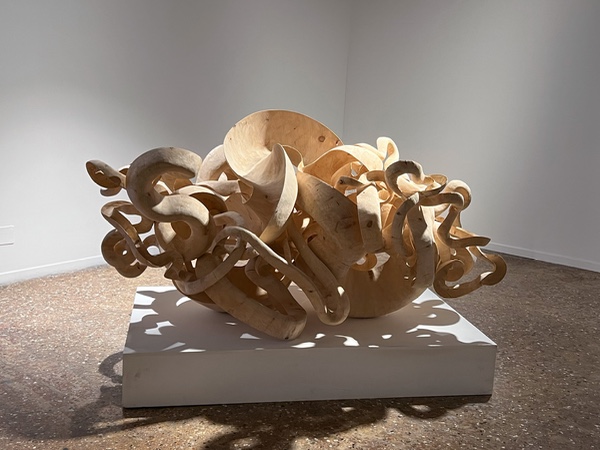
What began as a result of the Capital of Culture 2024 Bad Ischl - Salzkammergut and a collaboration with the University of Applied Arts in Vienna is now culminating in a transnational initiative: the invitation to the exhibition “Personal Structures” of the European Cultural Center where the sculpture “Ouroboros” by Koloman Wagner is on display.
With the great support of the city of Regensburg the wooden sculpture made of a dense network of endless loops could be included in the presentation at Palazzo Mora.
"Personal Structures" - an exhibition by the European Cultural Centre will transform Venice into an open laboratory of visions, practices, and languages - unfolding across the historic venues of Palazzo Bembo, Palazzo Mora and the Marinaressa Gardens as a citywide, multi-site exhibition.
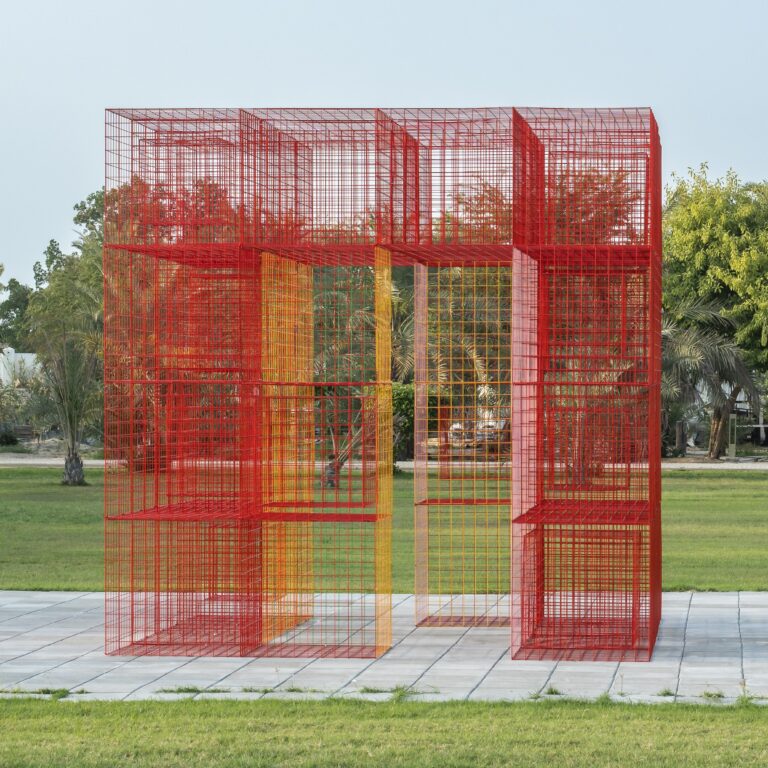
Rashid Al-Khalifa will show his new installation "Inhabited Crate" - a walk-in maze. Further a work will also be highlighted at the anniversary exhibition "Art beyond boundaries" of Dorothea van der Koelen's Venetian gallery.
Nauru joins the Venice Biennale for the first time in 2026. Its first National Pavilion at the 61st Biennale Arte titles AIM Inundated: Imagining Life After Land, and is curated by Khaled Ramadan, with the associate curators Camilla Boemio and Stefano Cagol.
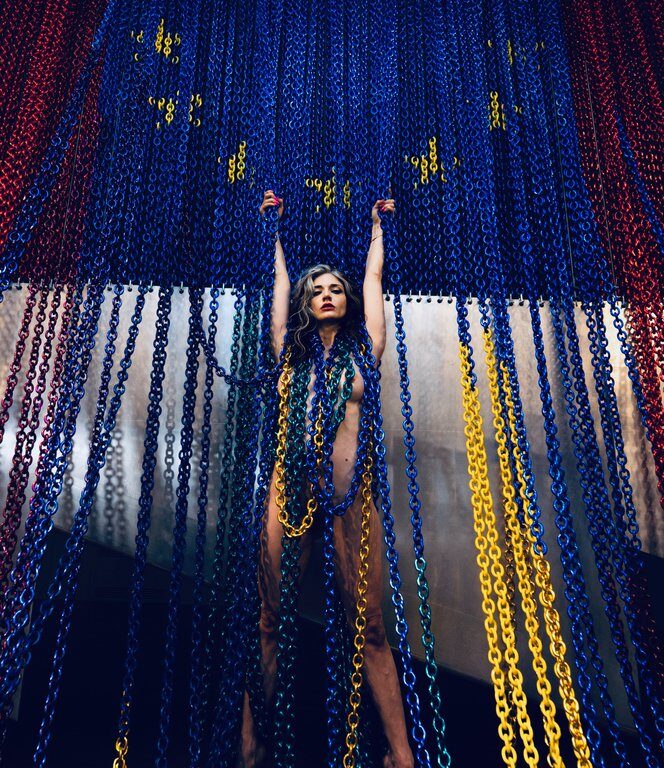
Iv Toshain creates a new site-specific work called "Erewhon" - a cascade of chains that echoes hierarchy, control, and exclusion. Nineteenth-century rusty Victorian barbs, iron-shaped thorns, glossy aluminum, and sharp plastic form a vexillological relic. The artwork overlaps pre-industrial manufactures and mass-produced elements, blending colours from various world emblems.
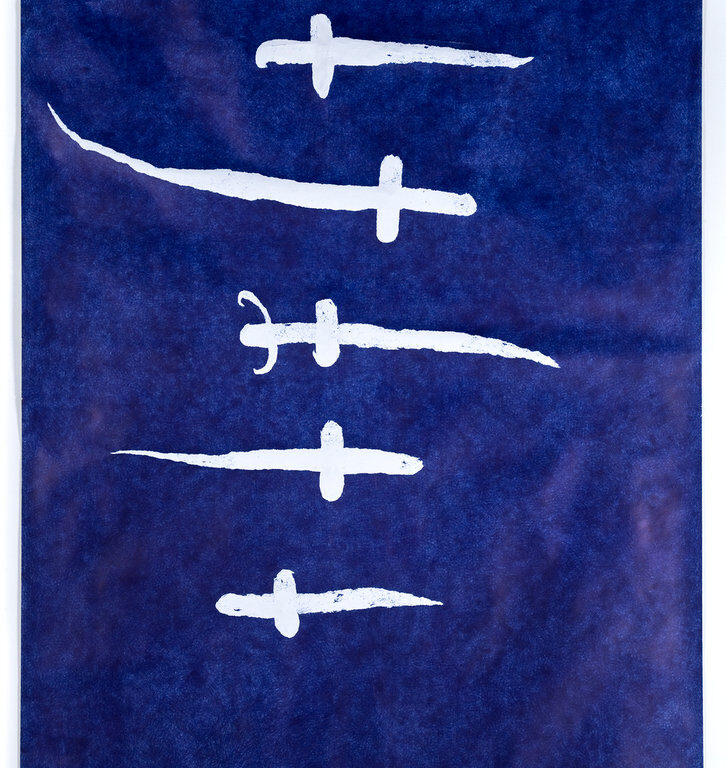
The Scuola Grande di San Rocco in Venice hosts "The Quiet Source", an exhibition by Jan Fabre. The exhibition, curated by Giacinto Di Pietrantonio and Katerina Koskina, proposes a dialogue between Jan Fabre's sculptures and Tintoretto’s famous painting cycle, relating two artistic languages centuries apart but converging in their investigation of light, spirituality and human experience. Fabre is the first living artist invited to intervene in one of the most historically important spaces in Venice, a building that was already the custodian of an exceptionally important Renaissance heritage.

Who is REBECCA HORN? An inventor, director, author, composer or poet? Or maybe all of them together? She sees herself primarily as a choreographer whose creative focus is always on people and their relationship to nature, culture, technology, biological capital as well as to the human and non-human.

Until July 7th in the Phillips Collection (Washington DC - USA) - America's first museum for modern art, founded in 1921 and one of the most important collections of Impressionist and American modern art can be seen:
BERNARDI ROIG: „The Head of Goya“

Discover in the basement of our gallery and in the exhibition "Wuthering Tales" in the gallery 5020 works by
ANNELIESE SCHRENK
which we presented this spring at the SPARK art fair in Vienna with great response from collectors and museums.

Can humanity rule over inhumanity? Can every guilt be forgiven? Can reason of state and humanity be reconciled? Can there be justice when private and political interests come into conflict with each other? These timeless questions about the correct use of power against the background of intrigue, violence and terror are at the center of Mozart's last opera, which will be performed next weekend at the Whitsun Festival:
„La clemenza di Tito“
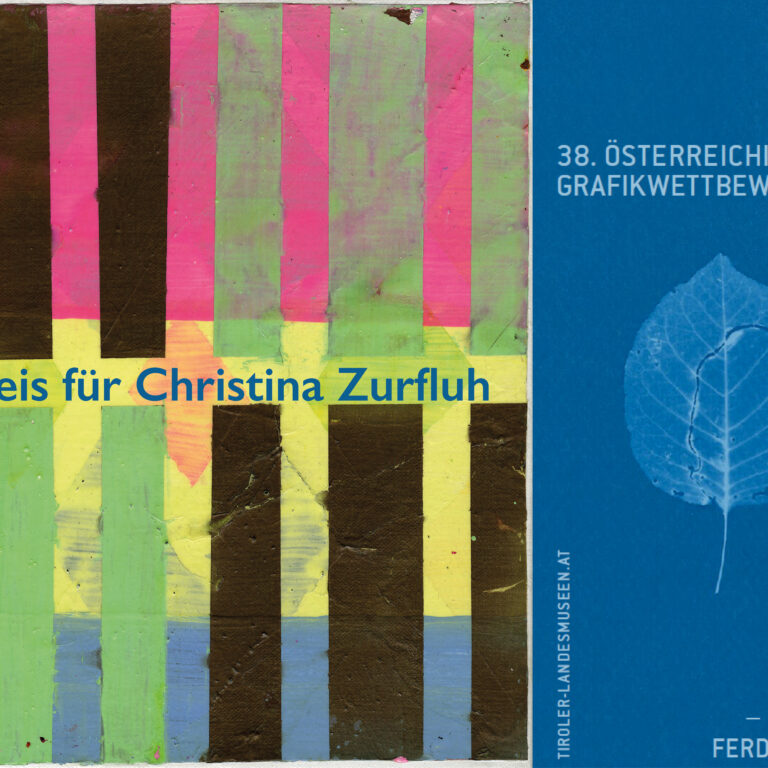
CONGRATULATIONS to CHRISTINA ZURFLUH – winner of the 38. Austrian Award for Art on Paper
71 years ago, in 1952, Paul Flora founded the Austrian Graphic Art Competition: an open competition with a free choice of subject, the only restrictions being the medium, format and date, i.e. only works on paper measuring a maximum of 1.5 x 1.5 metres and created within the last three years. With the original rules still in place today, 2023 was the 38th edition of a competition calling for creativity and experimentation.
In response, 443 entries – totalling around 1,000 sheets – were submitted by artists from Austria, twelve of which were awarded prizes while another four were purchased.

Der Goslarer Kaiserring ist einer der weltweit renommiertesten Preise für moderne Kunst. Er wird seit 1975 verliehen.
Die ersten Preisträger waren Henry Moore, Max Ernst und Alexander Calder. Ihnen folgten Pioniere der Gegenwartskunst wie Joseph Beuys, Gerhard Richter, Nam June Paik, Christo u.v.m.

frauen museum wiesbaden presents the first solo exhibition in a museum by the winner of the Strabag Artaward International 2021, painter and concept artist Anouk Lamm Anouk. With large-format paintings, drawings, and shaped canvases, across a total of three exhibition levels, the museum, founded in 1984, will be presenting the hitherto most extensive overview of the work of Anouk Lamm Anouk. The pieces explore in a subtle and yet highly expressive way the question of identity, queer intimacy, and emancipation from the customary social pigeonholing; indeed, it is the first non-binary position to go on show in frauen museum wiesbaden.

Hiba Alansari | Thuraya Al-Baqsami | Monira Al Qadiri | Rosa Barba Alexandra Bircken | Monica Bonvicini | Leda Bourgogne | Kerstin Brätsch Tania Bruguera | Ceal Floyer | Galli | Asta Gröting | Roey Victoria Heifetz Almut Heise | Leila Hekmat | Leiko Ikemura | Anne Imhof | Annette Kelm Conny Maier | Heidi Manthey | Beatriz Morales | Sara Nabil | Helga Paris Adrian Piper | Lin May Saeed | Karin Sander | Julia Scher | Marianna Simnett Sturtevant | Rosemarie Trockel | Patricia Waller

Spectrum employ’s traditional Middle Eastern architectural principles, such as those seen throughout Bahraini artist Rashid Al Khalifa’s heritage, and contemporizes them by playing on structural attributes that are also reminiscent of contemporary Gulf architecture.

OPENING: 14.07.2022
IVAM - Valencia
On the occasion of the Julio González Award being granted to Carmen Calvo (Valencia, 1950), IVAM has organized an exhibition which reviews the principal lines of this artist’s research from the late 1960s to the present time. To a large extent, one of Carmen Calvo’s works supports the recovery and re-creation of images and of discarded objects. In her complex creative process, the artist constructs her personal view of the world activating mechanisms such as daydreams, memories, desires and fears.